Guides · 8 min read
The best books for design and PM interviews
Design and product manager interviews look different on the surface, but they test the same handful of skills: framing an ambiguous problem, choosing a user, making a decision and defending it out loud, and showing genuine product sense. You can grind mock interviews for weeks, or you can read a short, well-chosen shelf that builds those skills faster — then practise. This is that shelf, split by the role you are interviewing for, plus the AI books both designers and product managers now get asked about.






A short list beats a long one: pick two or three books that match your gap, read them properly, and apply them in timed practice runs before you buy the next. The Start here tag marks the one to read first in each group.
How to use this reading list
Do not try to read all of these before an interview. Diminishing returns hit fast, and an interviewer can tell the difference between someone who read one book carefully and someone who skimmed ten. Choose based on where you are weakest: if you freeze on open-ended prompts, start with a book on structure; if your portfolio review rambles, start with one on communication; if you have no product framework at all, start there. Read one, run a timed practice exercise or a mock interview applying it, then decide whether you need the next. Practical advice beats passive reading every time.
Best books for design interviews (UX and product design)
The design interview — the whiteboard challenge, the app critique, the take-home — rewards structure and clear reasoning far more than pretty screens. These three build exactly that.
Solving Product Design Exercises Start here
Artiom Dashinsky
The single most interview-specific book on this list. It walks through the format of design-exercise and product sense interview questions and gives you a repeatable framework for answering “design an app for X” without freezing. If you only read one book for a product design interview, read this one.
Find it on Amazon →
Tom Greever
Interviews are won or lost on whether you can explain why. Greever teaches you to present and defend design decisions without getting defensive — the exact muscle a live whiteboard round and a portfolio review both test.
Find it on Amazon →
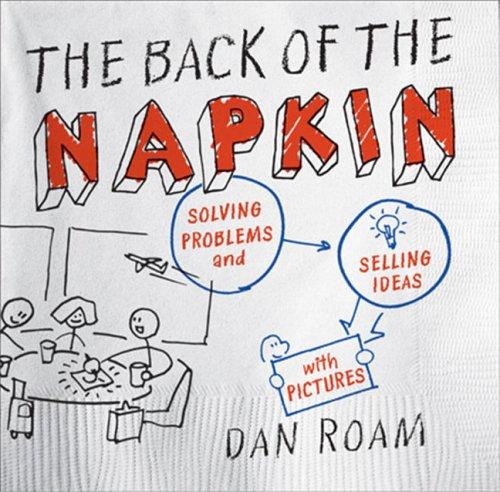
Dan Roam
Thinking and selling ideas with simple pictures is the core act of a whiteboard challenge. Roam shows how a handful of shapes can explain almost any problem, and that you do not need to draw well to think visually in front of an interviewer.
Find it on Amazon →Best books for product designers (product sense and craft)
Product design interviews increasingly test product thinking, not just interaction design. These deepen the “why build this at all” half of the job and give you the product sense senior loops look for.
Inspired Start here
Marty Cagan
How the best product teams decide what to build. Cagan’s product thinking is the missing half of design skill and the backbone of any product sense interview questions you will get in a senior design loop. It also names the “build trap” — shipping features instead of solving problems.
Find it on Amazon →
Teresa Torres
A concrete method for staying close to customers while you ship — interviewing, mapping opportunities, and testing assumptions. It turns “talk to your users” into a routine you can describe crisply when an interviewer asks how you would validate an idea.
Find it on Amazon →
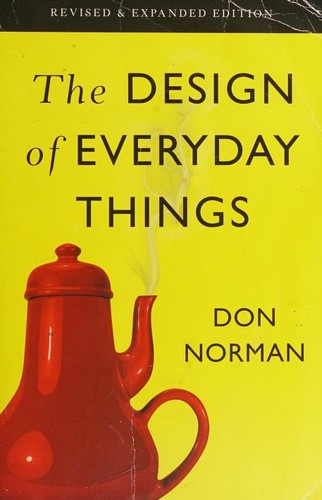
Don Norman
The foundation. Affordances, signifiers, feedback, and mental models are the vocabulary a strong candidate uses to critique any product on the spot. If your fundamentals are shaky, this classic resets them.
Find it on Amazon →Best books for product manager interviews
Product manager interviews have their own canon, built around product sense, execution, estimation questions, and behavioral interviews. These are the product manager interview books most candidates start with.
Cracking the PM Interview Start here
Gayle Laakmann McDowell & Jackie Bavaro
The most widely recommended starting point for interview prep. It covers the entire process — resume, product sense, estimation, behavioral — and what the product manager job actually is, which helps you answer like an insider rather than a candidate reciting frameworks.
Find it on Amazon →
Lewis C. Lin
The frameworks book. Lin’s CIRCLES method for product design questions, plus his approach to estimation and success metrics, gives you scaffolding to fall back on when a question is wide open. Heavy on sample answers and real-world examples from top tech companies.
Find it on Amazon →
Jackie Bavaro & Gayle Laakmann McDowell
Less about the interview, more about the skills the interview is trying to measure. Reading it makes your answers deeper because you understand the product management career you are being hired into — useful whether you are an aspiring product manager or leveling up.
Find it on Amazon →
Neel Mehta, Aditya Agashe & Parth Detroja
A plain-language tour of the technology and business strategy behind the products you will be asked about — go-to-market, platforms, monetization. Especially useful if you are moving into product management from a non-technical background.
Find it on Amazon →Best AI books for designers and product managers
Both design and PM loops now include AI questions — how you would design an AI feature, where the technology fits, what its limits are. These three cover the ground without requiring a machine-learning degree.
Co-Intelligence Start here
Ethan Mollick
The best general-audience book on actually working with large language models — what they are good at, where they fail, and how to use one as a collaborator. Informed, non-hype language for the “how do you use AI” question that now shows up in almost every interview process.
Find it on Amazon →
Ajay Agrawal, Joshua Gans & Avi Goldfarb
The economics of AI, framed for decision-makers. It reframes AI as cheap prediction and shows how that changes what is worth building — exactly the product strategy lens a product manager is expected to bring to an AI product question.
Find it on Amazon →Greg Nudelman & Daria Kempka
A designer-focused framework for AI-driven products: how to handle uncertainty, errors, and user trust in an interface where the system is probabilistic. The most practical guide for a designer asked to design an AI feature on the spot.
Find it on Amazon →A short reading plan before your interview
If you have a few weeks, do not read widely — read deliberately. Pick one book for structure (Solving Product Design Exercises or Decode and Conquer, depending on your role), one for communication or product sense (Articulating Design Decisions or Inspired), and one AI title (Co-Intelligence is the safe default). Read the first, do a timed practice exercise or mock interview applying it, then move to the next. Three books read and applied will do more for your interview performance than a stack you skimmed.
Common questions
What is the best book for a product design interview?
Solving Product Design Exercises by Artiom Dashinsky is the most interview-specific. Pair it with Articulating Design Decisions to handle the “explain your reasoning” side of the whiteboard round.
What are the best books for a PM interview?
Start with Cracking the PM Interview for coverage and Decode and Conquer for frameworks and sample answers. Add Cracking the PM Career if you want to understand the product manager job deeply enough to answer like someone already doing it.
Do I need to read AI books for a design or PM interview?
Increasingly, yes — most loops at tech companies now include at least one AI question. You do not need deep technical knowledge; Co-Intelligence gives designers and product managers enough informed perspective to answer well, and UX for AI or Prediction Machines add role-specific depth.
How many books should I actually read before an interview?
Two or three, chosen for your specific gaps, read properly and applied in practice runs and mock interviews. That beats skimming ten every time.